
In the world of dessert wines, Port is in a class of its own. For almost two thousand years, this unique viticultural landscape has ascended out of the granite-layered hillsides along the Douro River valley to produce one of the world’s most exceptional wines. Port was and is a key product for Portugal and even more, one that represents Portugal around the world.
The history of Port is one of political and economic woes. In the 17th century, due to problems between Britain and France, the ubiquitous supply of Claret or Bordeaux wine, dried up. This caused British wine merchants to seek out another source of wine. Britain had long been a trading partner and ally of Portugal so it was only natural that the British wine merchants turned to Portugal for an alternative.
Port is produced exclusively in the Douro Valley, one of the oldest defined wine  regions in the world, having been established in the 1756. This area, located 40 miles inland from the west coast of Portugal, is a region of over 618,000 acres of extremely rugged terrain and steep terraced vineyards set on both sides of the narrow Douro River. With only 10%-12% or approximately 82,000 acres, of cultivated vine planted on the rugged hillsides, the angle of the vineyards rises from 35º up to 70º in certain areas. Some grapes are grown as high as 1800 feet above sea level but the best grapes are grown at the lower elevations.
The weather in this area is one of extremes. The summers can be extremely hot and dry often reaching 43°C while the winters are quite cold with the temperature sometimes dropping to -18°C. The soil composition is anything but fertile as there is almost no earth on these mountains but hard granite-schist rock that retains little water and features few nutrients. Nevertheless, over the past 300 years, a top soil has been created by smashing up the granite rocks to a depth of three feet and terraces have been created on the hillsides by using hard labour and dynamite. Grape vines are planted on these steep terraces and follow the shape of the mountain with the vines quest for water driving the roots 65 feet down through the cracks in the rock.
About 30 different varieties for the production of Port are grown but only five are considered to be of exceptional quality. These are Touriga Nacional, Tinta Roriz, Tinta Barroca, Tinto Cão, and Touriga Francesa. Of these, the finest is Touriga Nacional, which is usually blended with one or all of the other varieties. A 100% Touriga Nacional is made by only a few producers and it is usually a very concentrated and sometimes a very expensive wine
The making of Port is one of the most unique production techniques in the world. During the production of Port, the fermentation process is stopped at an alcohol level of about 7% by the addition of pure wine alcohol of 77%, in a ratio of around 1 to 4. This leaves unfermented grape sugars in the wine and consequentially, a naturally sweet wine with an alcohol content of between 19% and 22%. By varying the quantity of alcohol and when it is added, Port can be made a little sweeter or dryer.
Listed below are the various types of port produced.
- Ruby Port is the basic, blended from different years and vineyard sites so that the producers can have their own “house style”.
- Vintage Character Port is aged from four to six years before it is filtered and bottled.
- L.B.V. or Late Bottled Vintage is a vintage Port, aged 4-6 years in barrels before release. An excellent, everyday Port and well worth the extra coin.
- Crusted Ports are a blend of wines from two or three vintages and aged for three to four years. They are bottled without filtration so they will develop a “crust” or sediment over time.
- Single Quinta Ports are Vintage Ports made from single vineyards or estates. They are bottled two years after harvest, and in declared years, these wines will be the components of Vintage Ports.
- Vintage Port is bottled within two years of harvest and is meant to be matured in the bottle for an extended length of time, up to 50+ years. It is produced from the best grapes from the best vineyards. Vintage Port is a “declared” port in that the Port “House” must declare it as a vintage after two years and is only done in the best years. There are usually three or four declared vintages out of every ten years.
- Tawny Ports are wines that have been aged in casks anywhere from 10, 20, 30 or 40 years. During this time, the colour of the wine changes from purple/black to mahogany-orange hence the name. A tawny port from a single vintage is called a Colheita. These are aged for at least 7 years.
There is a ritual surrounding the enjoyment of port. Customarily, the wine should be passed “port to port”, that is the host will pour a glass for the person seated at their right and then passes the decanter to the left (the port side). The decanter then continues clockwise back to the host.
If the decanter stops moving at some point, it is considered poor form to ask for the decanter directly. Instead, the person seeking a refill would ask the person who has the decanter, “Do you know the Bishop of Norwich?” If the person being asked says no, the person seeking a refill will remark, “He’s an awfully nice fellow, but he never remembers to pass the port.”
One solution to the potential problem of a guest forgetting their manners and “hogging” the port is the Hoggett Decanter. This has a rounded bottom making it impossible to put down until it has been returned to the host, who can then rest it in a specially designed wooden stand known as “the Hoggett.”
Weekend Wine Picks:
This wine comes from the same vineyards that, in a year when a Vintage is “declared”, 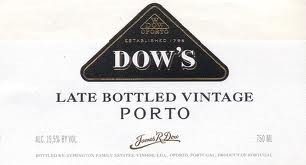 produce a Vintage Port. However, as they are bottled between the fourth and sixth year after the harvest, they mature more quickly and are ready to drink much sooner. The 2005 Dow’s LBV has a deep, opaque purple-ruby colour, an elegant aromatic nose of ripe blackberry jam, black olive, menthol, licorice and black pepper spice. Well rounded on the palate, Dow’s has a more traditionally drier texture with rich ripe blackberry fruit flavours, which leads to a long and lingering finish making it one of the finest LBV Ports available. It can be enjoyed anytime and pairs wonderfully with chocolate desserts and hard cheeses like Wensleydale or mature Cheddar.
 The Fonseca Bin 27 is an elegant and refined Port with crisp acidity and less sweetness than other Port producers. It has a medium dark rubycolour, with aromas of blackberries, cassis, mint, fruitcake, brown sugar and a light peppery spice. The ripe red fruit flavours are long and complex with a relatively dry finish in this sweet, fortified red. Enjoy over the next 4 years.
The Quinta do Noval LBV 2004 is one LBV that tastes like a single Quinta Port. Beautiful  rich, dark colour with a spicy nose of blackberries, cassis, black cherries, menthol and licorice, the palate is a smooth and velvety mouthful of fresh black and red fruits with a firm tannic structure and a long juicy, hedonistic finish. Bottled without filtration, this wine has plenty of depth, colour and richness of fruit and intensity of bouquet that other LBVs are lacking. This is one serious LBV.
For a thirty year old wine, this is still quite darkly coloured although it is starting to show some sign of aging. The 1980 Gould Campbell shows good aromas, with figs, toasty dark cassis and blackberry fruit and hints of menthol, smoke, leather and tobacco. Gorgeously rich on the palate, the silky, creamily textured cornucopia of toasty black fruits, soft acidity and ripe, succulent yet still firm tannins make this a delight to drink. This could still be cellared for another 10-15 years.
While the cost of this prohibits the opening of a bottle, suffice to say that the Dow’s Vintage  1970 is one of the most spectacular Ports currently available. One of “the classic twelve” vintages of the past one hundred years, this is a wine that is just now beginning to show some maturity. Major wine pundits from around the world have remarked that this wine is…. “youthful looking with a dark, vibrant purplish-ruby colour with enticing mint, licorice and raspberry fruit intertwined on the nose and palate. The ’70 Dow is still on the upswing and the structure depicts that this VP will only continue its fine evolution and actually improve.”

 firstpressings